


Can table olives be harvested mechanically without compromising fruit quality?
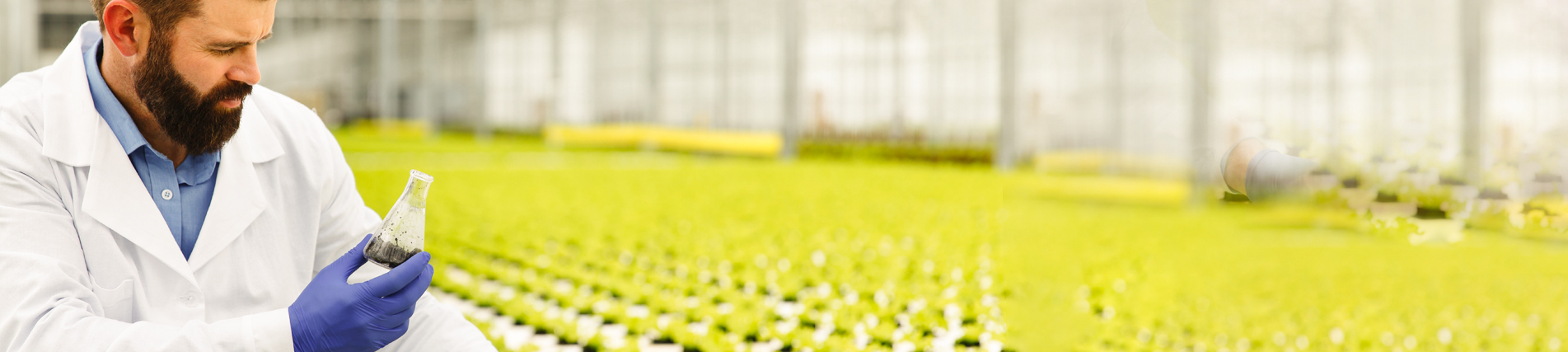
This question is at the center of a research conducted in the laboratory of Prof. Ayelet Fishman at the Faculty of Biotechnology and Food Engineering at the Technion. The study is carried out by PhD student Paz Shemesh, and this year May Meerovich also joined the project.
Mechanical harvesting of olives can cause mechanical injuries to the olive skin, which may lead to browning and negatively affect the appearance of the olives after processing. In a previous study, a treatment applied immediately after harvest was examined, in which the olives are immersed in a mixture of water and caustic soda (NaOH) at a concentration of 1%. The results showed that this treatment reduces browning caused by mechanical harvest, without affecting the taste or texture of the olives after processing and fermentation of table olives.
The results of this previous study were published in the following article: https://lnkd.in/e8iE9RwF
In addition, different olive cultivars were examined in order to identify varieties that are more resistant to mechanical harvesting injuries. The results showed that several cultivars – particularly Hojiblanca – demonstrate higher resistance to mechanical damage and may therefore serve as a suitable alternative to the Manzanilla cultivar in the table olive industry.
In recent years, the research has expanded to examine pre-harvest treatments, aimed at reducing the fruit’s susceptibility to damage during mechanical harvesting. As part of this work, calcium salt applications in the field prior to harvest were evaluated.
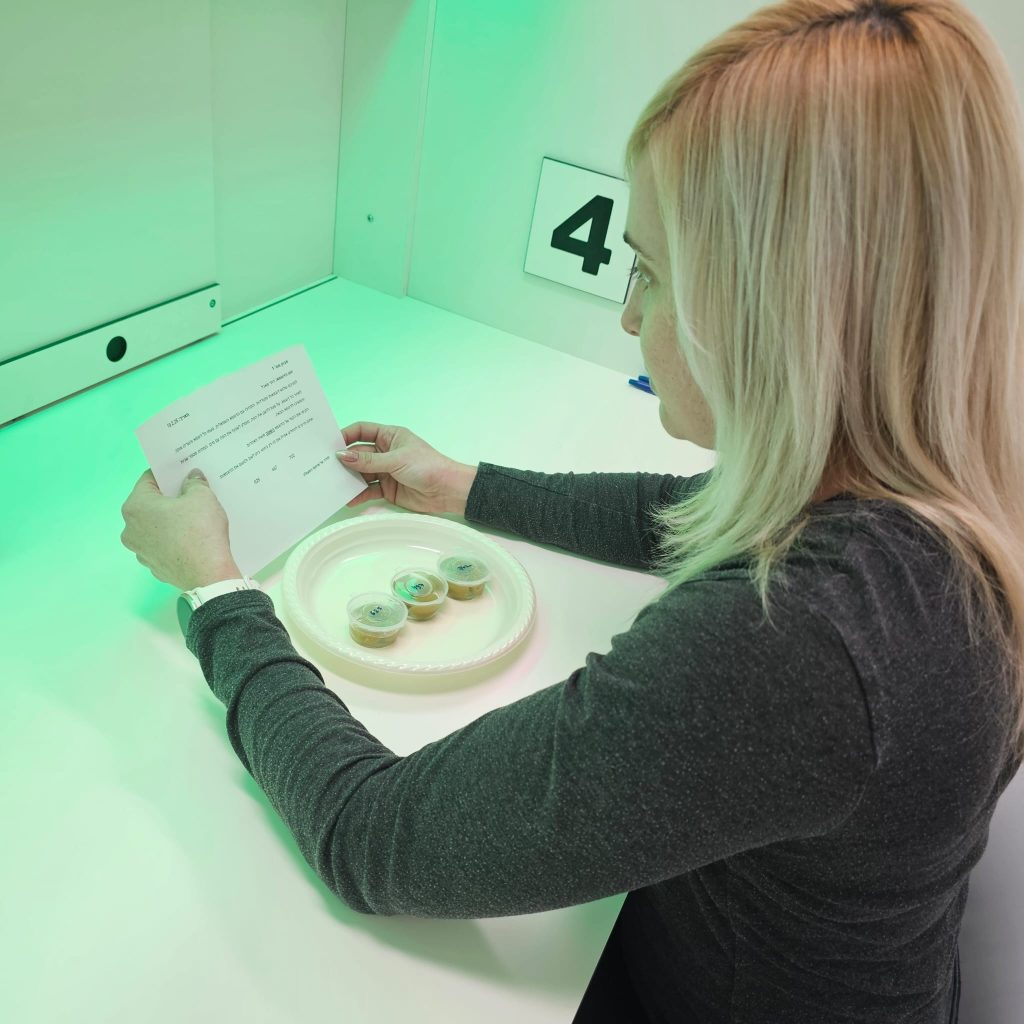
To determine whether these treatments affect the quality of the olives after processing, a blind sensory evaluation was conducted in the new tasting room at the Carasso FoodTech Innovation Center at the Technion – Israel Institute of Technology. Encouragingly, the results were excellent: the sensory panelists were unable to distinguish between treated and untreated olives, indicating that the treatment does not affect the sensory properties of the final product.
This research builds upon a previous project funded by BARD The U.S.-Israel Binational Agricultural Research and Development Fund and conducted in collaboration with Dr. Arnon Dag, Gilat Research Center, Agricultural Research Organization, at the Volcani Institute, Israel, as well as researchers from University of California, Davis, California.
